Servicing6 min read
Wet timing belts: why they fail and what to watch for
A belt that runs in engine oil can soften and shed pieces, and those pieces can block the oil supply. Here is how to tell if your car has one, and how to stay ahead of it.
By Kaine Carter
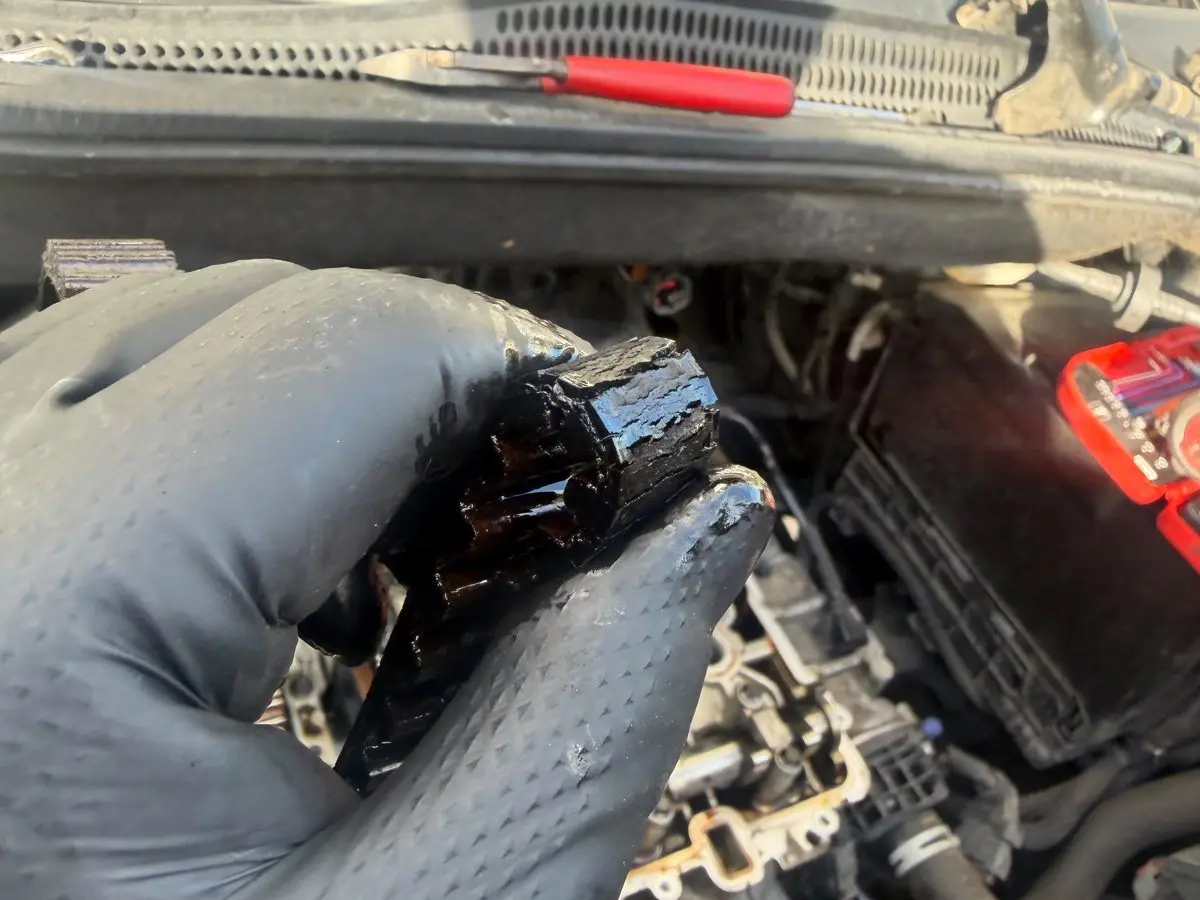
Most timing belts run dry, behind a plastic cover at the front of the engine. A number of smaller, modern petrol engines instead run the belt in oil, which makes them quieter and more efficient when everything is right. Well-known examples include the 1.2 PureTech three-cylinder used across Peugeot, Citroën, DS and Vauxhall models, and some Ford 1.0 EcoBoost engines.
Why a wet belt can fail
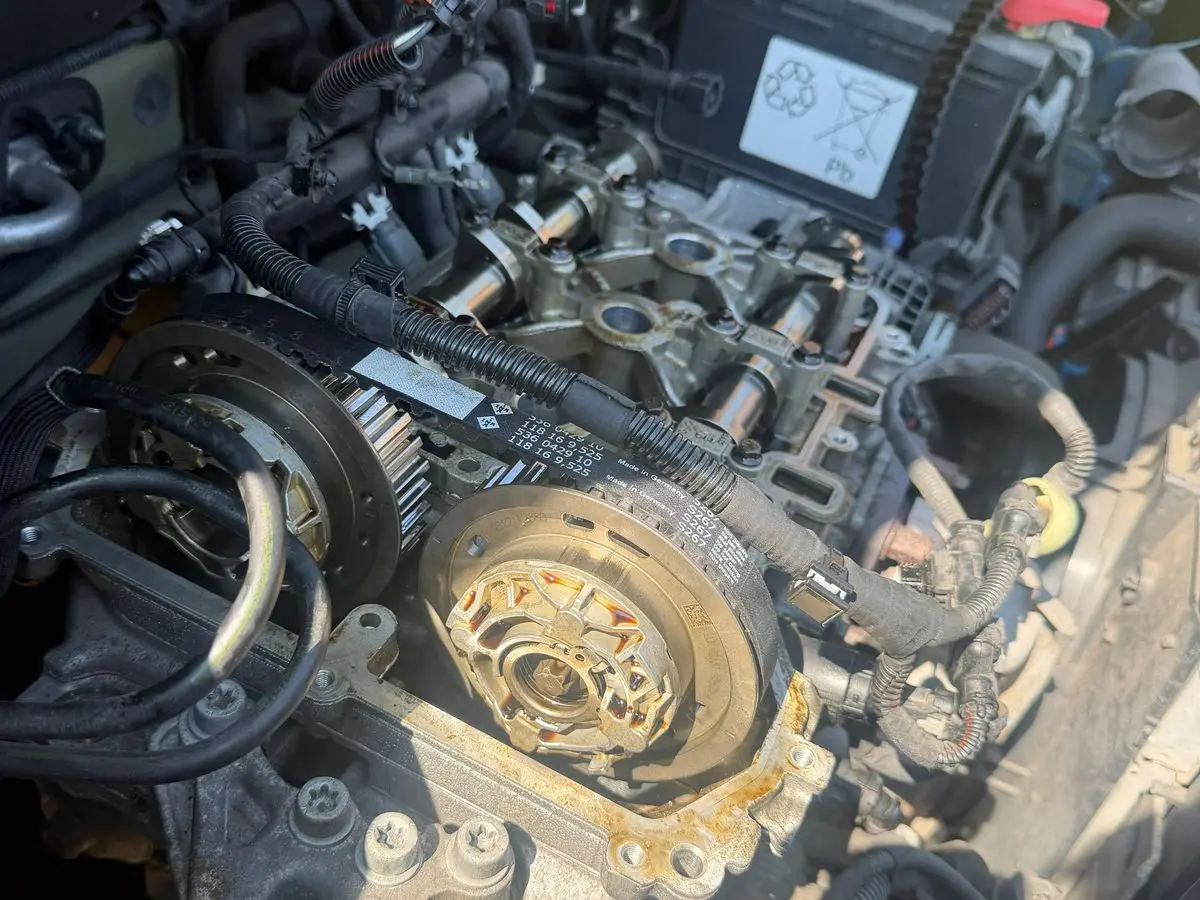
The belt's rubber is designed to live in oil, but it does not tolerate the wrong oil, overdue oil or fuel-diluted oil well. Over time it can swell, soften and start shedding fragments. The photo above is a belt in exactly that state, taken off a customer's car on their driveway.
The danger is less the belt snapping than what the fragments do. They collect in the sump and can block the strainer on the oil pump's pickup, so the engine is starved of oil pressure — which can destroy it far faster than a worn belt would.
Warning signs
- An oil pressure warning light, or a low-oil-pressure message. Stop driving and have it looked at.
- An engine warning light or a "repair needed" message with no obvious cause.
- Black specks or bits of rubber visible in the oil, or on the dipstick.
- A car that is overdue on its oil change, or has been run on the wrong oil.
Often there are no signs at all until it is well advanced, which is why the checks below matter more than waiting for symptoms.
How to stay ahead of it
- 1.Use exactly the oil your handbook specifies — the grade and the manufacturer's approval code, not just a similar-looking bottle.
- 2.Change the oil on time, and sooner if the car mostly does short trips.
- 3.Check the belt interval for your exact engine. Manufacturers have shortened the recommended interval on some of these engines, so an older handbook may be out of date.
- 4.Have the belt inspected if the history is unknown or the car has been run on the wrong oil.
Replacing a wet belt
It is a bigger job than a dry belt on many engines, and if the old belt has been breaking up, the sump and the oil pickup need cleaning too, so no debris is left behind. Timing belts start from £349; a wet belt is usually more, so we price it from the registration before anything is ordered. The work is done at your address in Milton Keynes, Leighton Buzzard, Bedford, Buckingham and Northampton.