 Most common
Brakes
Per pairBrake Pads
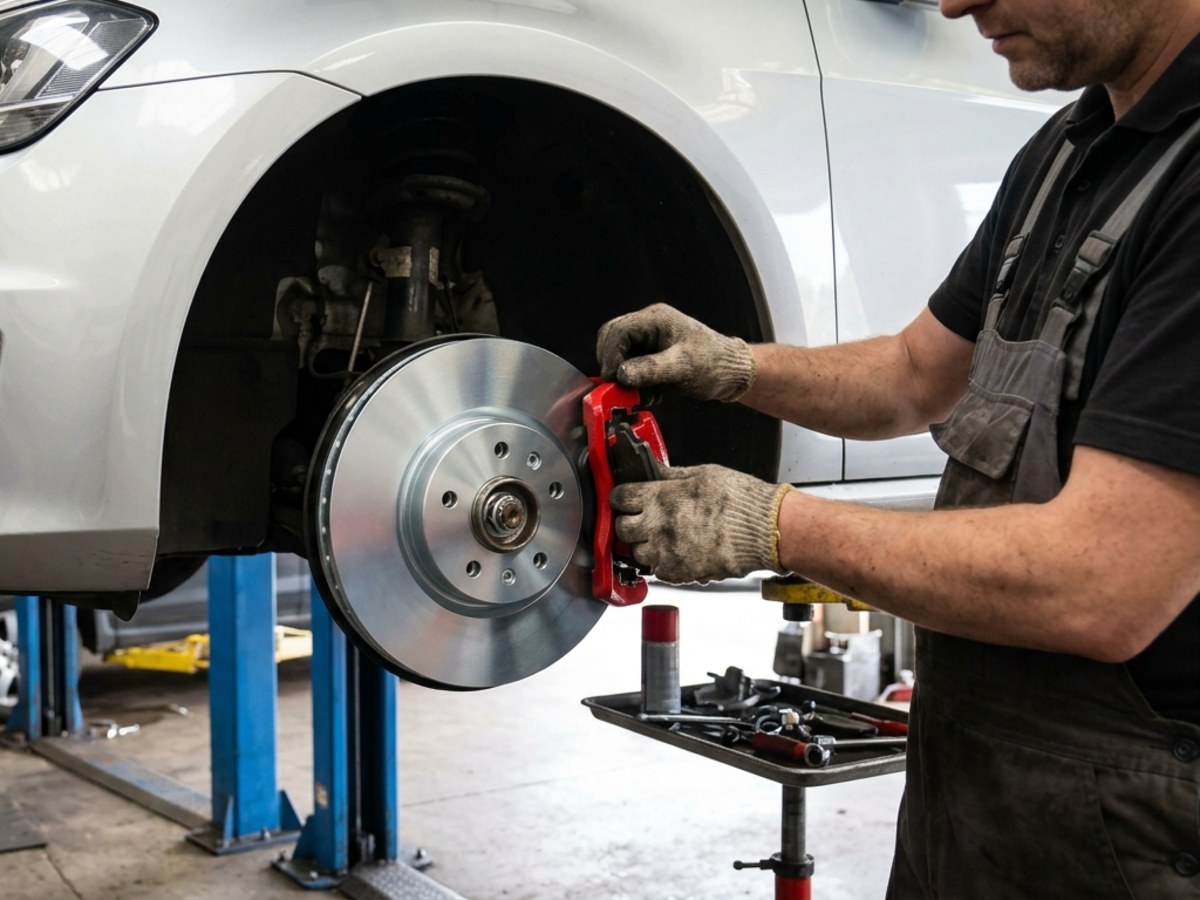
A pair of new pads, fitted, with your discs measured and reported so you know whether they will last another set.
From £89a pair, fitted
View productCollection
Pads on their own, or pads and discs together. Which one you need is decided by measuring the discs against the manufacturer’s minimum, not by guessing — so we measure first and give you the figures before anything is quoted.
2 options · per pair, priced from your registration
Most commonBrakes
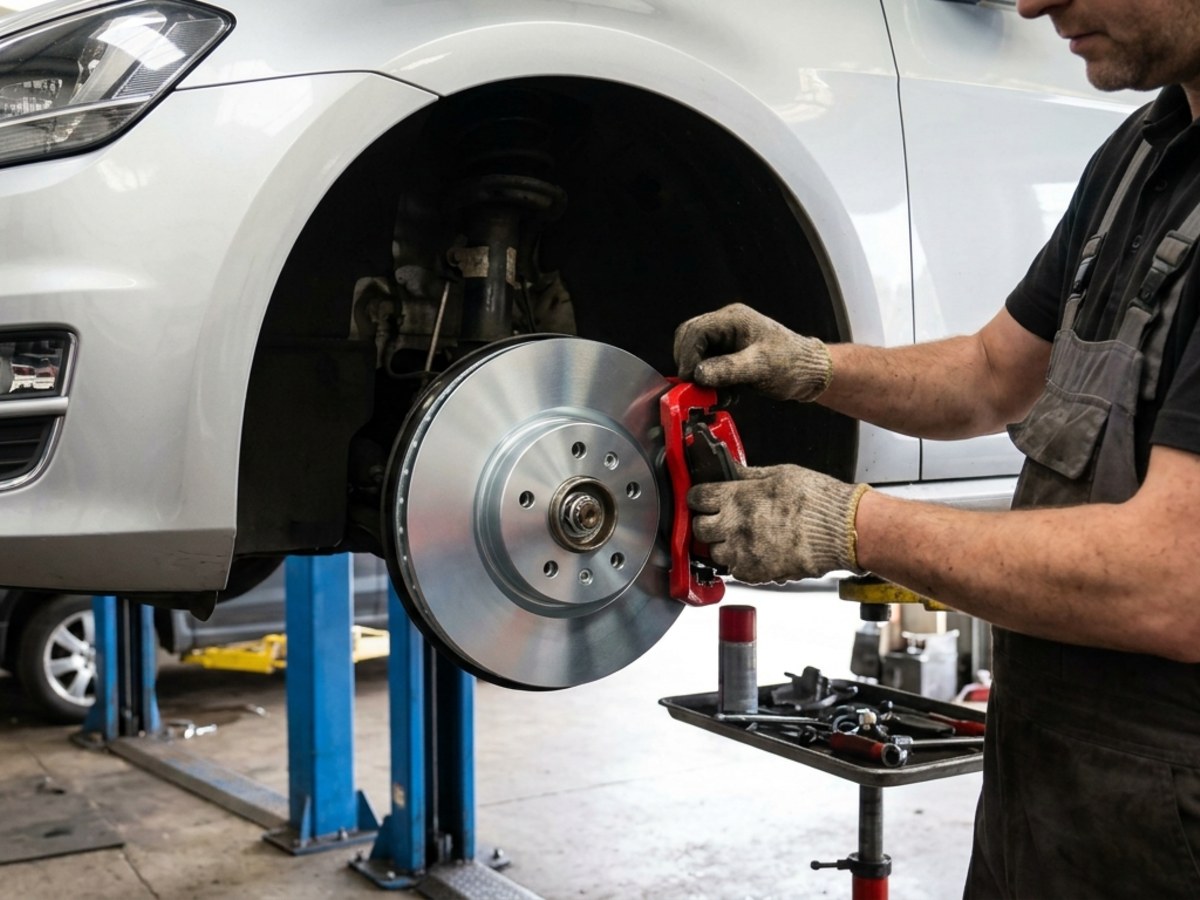
Per pairA pair of new pads, fitted, with your discs measured and reported so you know whether they will last another set.
 Done properly
Brakes
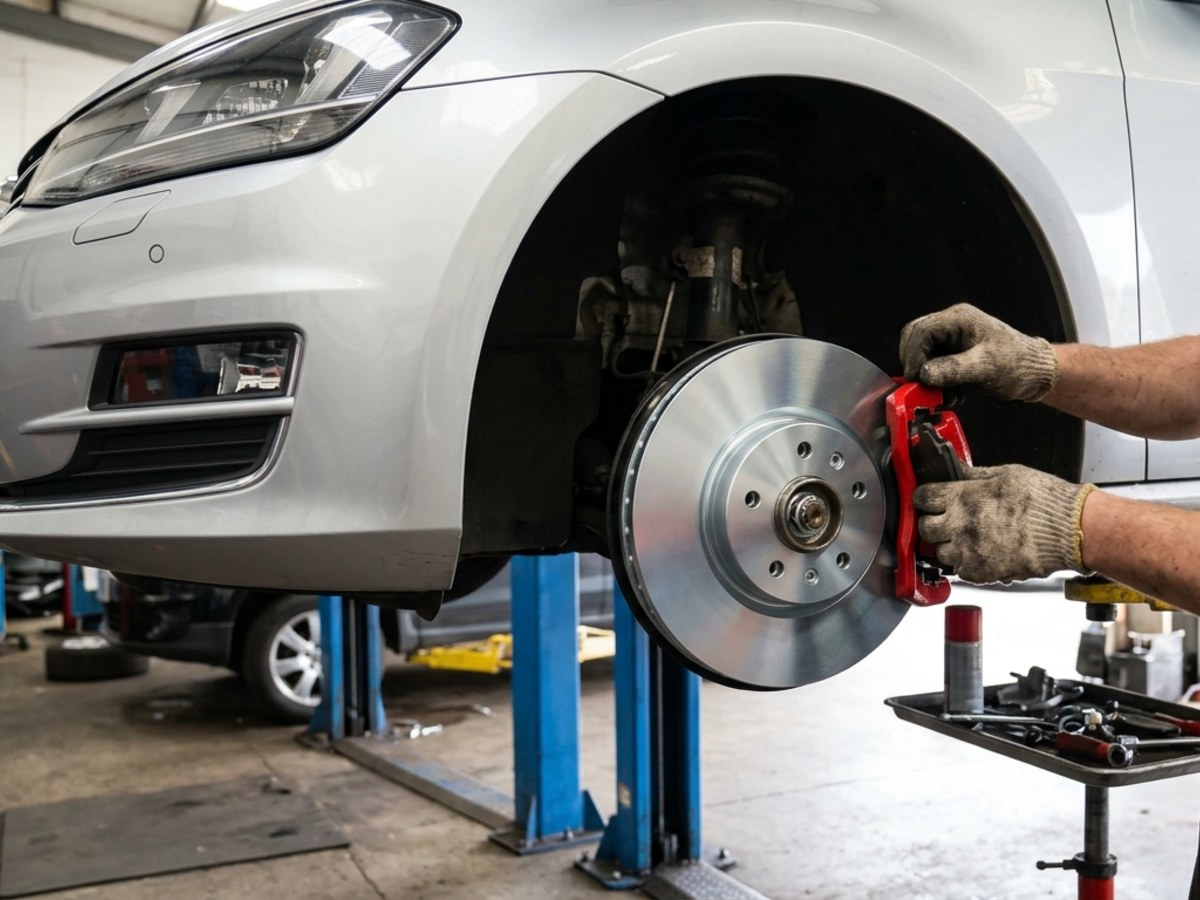
Per pairPads and discs replaced together as a pair, with the hubs cleaned back so the new discs run true from the first mile.
What it is telling you
Almost every brake job announces itself before it becomes expensive. Here is what each sign usually turns out to be — and the one that means stop driving.
Often the wear indicator doing its job — pads getting low rather than a fault.
Usually the pad material is gone and metal is against the disc, cutting into it.
Rarely warped discs. Far more often a disc sitting out of true on a dirty hub face.
Typically a sticking caliper on the opposite side, which eats that side's pads early.
Glazed pads, a fluid problem, or pads simply worn beyond their useful range.
On cars with wear sensors, the pad has reached the trigger point. It is not a suggestion.
How the price is decided
A disc has a minimum thickness stamped into it by the manufacturer. New, it might be 26mm; the minimum might be 24mm. Two millimetres is the entire service life.
We measure yours and tell you the number. If there is thickness left, you need pads. If there is not, fitting pads to worn discs wastes both — and we will say so rather than take the smaller job and see you again in six months.
Discs above the minimum
Pads only. From £89 a pair, fitted.
Discs at or near the minimum
Pads and discs together. From £179 a pair, fitted.
Lipped edge or a pulsing pedal
Pads and discs, and we clean the hub faces back.
Sticking caliper
Quoted separately, because it is a different job.
What customers say
Had my Mercedes C180 in with Kaine to replace both front suspension springs. I knew that this was not an easy job on this car. Dropped the car off in the morning and it was ready that afternoon. He did an amazing job and I'll be recommending him to friends and family for any work that they need doing. 5 stars!
Had my Audi S3 in for a complete overhaul — Kaine supplied and fitted all the parts, including cam belt, water pump, a full service and a balance shaft delete. He also noticed one of my rear callipers was sticking, so recommended and fitted a new calliper and new rear discs and pads too. A 5 star service — I'll only use Kaine from now on for any mechanical work.
Exceptional experience with Kaine. Came out to me, took my car and fixed it all within two hours. Very impressed and will definitely call him if needed again. Great price.
While the wheels are off
The wheels are already off and the car is already with us, so anything else due costs labour once rather than twice.
Servicing
The full annual service. Every filter, a 40 point safety check and the wheels off to inspect the brakes properly.
MOT
We collect the car, test it, ring you with the result, and bring it back — so the MOT costs you a phone call rather than a morning.
Questions
By measuring. Discs have a minimum thickness stamped on them by the manufacturer, and once they are near it they have to be replaced alongside the pads. We measure yours with the wheels off and give you the actual figure before anything is decided.
Usually that the pad material is gone and the metal backing is against the disc. At that point the disc is being cut into and pads on their own will not fix it. Stop driving it and ring us — this is the one brake noise not to leave.
No. Many pads have a wear indicator designed to squeal when they are getting low, which is a warning rather than a fault. Light rust squeal on a first stop of the morning is normal too. Constant squealing under braking is worth looking at.
For a pair — front or rear. Most cars need the fronts first because they do the majority of the braking, and the rears follow later rather than at the same time.
Yes, and it is the sensible way round. On a major service the wheels come off for the brake inspection anyway, so doing both in one visit saves a second lot of labour.
No. A car can be maintained anywhere as long as the work is done to schedule with the correct parts. We fit quality branded parts as standard, or genuine manufacturer parts if you would rather.
Book in
Send us the registration and tell us what it is doing — grinding, squealing, a pulsing pedal or just a warning light. We come back with what it needs and what it costs.